 Print This Post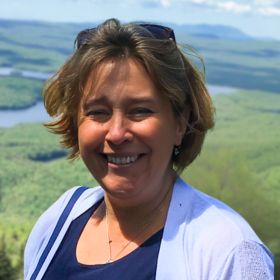
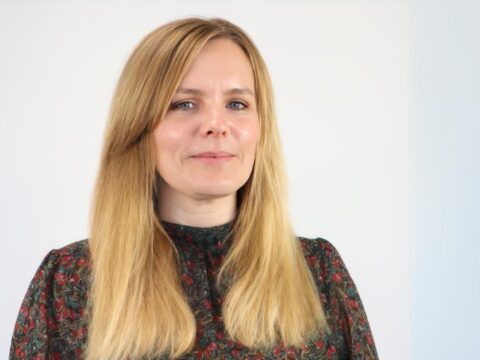
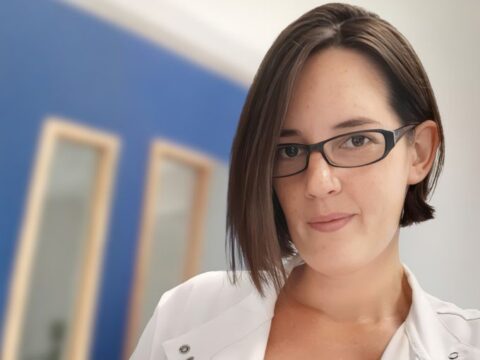
Professor Louise Serpell
Louise Serpell’s career has taken her from a biochemistry project on prion diseases to research on amyloid structure, leading a university research group and freelance consultancy. Her work focuses on protein misfolding and aggregation, particularly tau and amyloid-beta. Here, she reflects on learning new techniques, supporting researchers and finding a different way to work after more than 30 years in research.
“You don’t have to say yes to everything and you must pace yourself.”
Finding my way into research
I wanted to be a scientist from an early age and enjoyed science at school. I studied Biochemistry and Genetics at the University of Nottingham from 1989 to 1992. My third-year project was on prion diseases, and I enjoyed it so much that I decided to pursue a PhD.
From 1992 to 1996, I completed a full-time PhD in Molecular Biophysics at the University of Oxford. My project, Structural Studies of Amyloid Fibrils, developed the interest in protein structure that has stayed with me throughout my career.
My work focuses on protein misfolding and aggregation, particularly tau and amyloid-beta, from both structural and cellular perspectives. I have always wanted to keep an open mind and learn whatever techniques are needed to answer questions about mechanisms of disease.
Developing independent research
In 1996, I moved to Toronto for a postdoctoral position at Tanz Neuroscience, where I worked on presenilin structure. This followed the discovery of presenilin mutations associated with familial Alzheimer’s disease; I was not involved in that discovery.
In 1997, I moved to the MRC Laboratory of Molecular Biology in Cambridge. I held an independent postdoctoral position until 2000, running my own research on amyloid structure without a supervisor. This included cryoelectron microscopy of amyloid-beta fibrils.
The opportunity to establish my own independent research in Cambridge was particularly important. Research Fellow is the closest description of that role.
A fellowship and a growing group
In 2000, I began a Wellcome Trust Career Development Fellowship at the University of Cambridge and started growing my group. This was a junior fellowship. I moved it to the University of Sussex in 2003, where it continued until 2006.
In 2010, I became a professor at Sussex. As the group grew, we expanded our work in cellular biology alongside our structural research.
Building a supportive research group
My research group were incredible. People brought different skills and backgrounds, and together we built a team whose members complemented and supported one another. That mix of experience mattered to the research and to how we worked together.
One of the most rewarding parts of my career has been watching PhD students grow and thrive. They arrive as novices, learn their project and become its experts. Eventually, they know more about that project than anyone else. I loved working with my group, with people from different places and backgrounds, and going to conferences.
Managing the harder parts of academic life
Rejection of grants and papers was always challenging. I found it hard to keep bouncing back and carrying on. At several points, I considered other career moves, including industry, because I felt I could not cope with that rejection. What kept me in universities was how much I enjoyed the freedom of research.
I also found teaching interesting and enjoyable, but marking became increasingly overwhelming. Enjoying research and working with a group made up for the more difficult parts of academic life like grant rejection. Those pressures were part of my experience alongside the work I valued.
Choosing a different way to work
After more than 30 years in research, I was ready for a change. I left my academic role and became a research consultant, working across different areas related to neurodegenerative diseases.
I now work mainly freelance through my consultancy, Serpell Science, on projects with charities, industry and academics. I am also an Emerita Professor at the University of Sussex and still supervise PhD students and a postdoc there. My work has changed, while those research and supervisory connections continue.
Continuing to learn
For me, career development means staying open to the techniques needed to answer the key research question. That has been a consistent thread from structural work on amyloid to a broader research programme. The question should help shape what you learn next.
My advice
Find mentors and supporters: people you trust to help you. Look for opportunities to join grant panels and learn how decisions are made. If you recruit or lead a team, bring together people from diverse backgrounds and support them to build a coherent, happy group.
You do not have to say yes to everything, and you must pace yourself. Do not overwork. Where you can, do what interests you. Enjoy your work as much as you can, and enjoy your life. Work is not the most important thing.
Find out more
Explore Louise’s research and publications through her ORCID profile.