
 Print This Post
In my last blog, I wrote about concrete ‘lab-hacks’: PhD habits and systems I implemented (or wish I had implemented) that make doing major projects like a PhD, (especially wet lab projects, and especially those involving cells) much easier to manage. I discussed experiment numbering, the best way to use reference managers, file naming, consistent terminology use, and the beauty of a good spreadsheet, and more (scintillating topics, all).
In part 2, there are yet more basic PhD habits you can adopt, and more bigger picture practices, not necessarily related to your experimental work, but in some cases more about your attitude and mindsets to adopt from the outset. These continue to be of the genre of things that take time and effort but will pay off in the end, or you will come to wish you had done if neglected.
Document your thought processes, not just your results
Most lab books and research notes are good at recording what happened in an experiment, but few are good at recording why they happened, or what happened in between all the different experiments.
This is a problem because the “why” is often what you need later. Why did you change the protocol? Why did you exclude that sample? Why did you choose that concentration? Why did you stop pursuing that aim? Why did you switch tack and go in a different direction? What evidence did you rely on to make particular choices? Why did you believe this experiment answered the question?
At the time, these decisions feel obvious. Later, they do not. Later, you may find yourself staring at an old dataset wondering why you even did this. Document the reasoning. Not in huge essays, necessarily. Just short notes:
“Using 10µM because pilot EXP017 showed toxicity at 20µM.”
“Excluding sample B3 because cell count was unusually low after replating and imaging showed widespread debris.”
“Switching antibody lot after high background in EXP028 and EXP029.”
“Decided not to pursue this analysis further because effect disappears after normalisation to cell number.”
“Based on Tennant 2010, Smith 2011, and Capaldi 2012, decided to stimulate cells using TARDIS rather than DALEK”
These notes are invaluable because they help with writing methods and results, they help with troubleshooting, they help when supervisors ask why something was done, and they help when it’s 3 years down the track and you’re trying to work out why you did something the way you did it.
Keep a list of ideas in one place
This is related to documenting thought processes, but slightly different. I wish I had kept a more centralised running log of ideas, project directions, and unanswered questions from the start.
A PhD generates a lot of ideas, and ideally a lot of data, and can never answer all the questions it comes up with. Some are good. Some are bad. Some are good but impractical. Some are suggested by supervisors, some by lab mates, some by conference talks, some by papers, some by staring into the middle distance while waiting for a centrifuge.
Write them all down! Saving a list of ideas for later will be super helpful if the opportunity ever comes to write a pilot grant, supervise a student, or become a postdoc, or you just hit a dead end in your research and need to go back to a saved checkpoint. Also include decisions not to do things.
Build relationships before you need them
Not everything useful in a PhD looks productive in the narrow sense. Getting coffee with someone, chatting after a seminar, going to departmental events, asking a postdoc about their project, or having lunch with people from another lab can feel like time away from “real work”. This pays off in the long run though.
Research is social. Ideas, opportunities, collaborations, jobs, references, troubleshooting advice, and emotional survival all depend on relationships.
You do not want the first time you talk to someone to be when you desperately need their protocol, equipment, letter of support, or career advice.
Spend time getting to know people. Not in a cynical networking way, where every interaction becomes a LinkedIn transaction, but in an earnest, generous, and curious way. Ask people what they work on. Ask how they got there. Ask what they wish they had known. Ask for advice before you need urgent help.
This is particularly valuable early in a PhD, when you may feel like you do not have much to offer yet. In reality, you do. You have enthusiasm, curiosity, time, and a fresh perspective. You are also building the relationships that will make the rest of the PhD easier and more enjoyable.
The person you chat to at a seminar might later help with a method. The postdoc you ask for advice might later tell you about a job. The student you meet at a local conference might become a collaborator. The technician you take the time to know properly may save you from making an expensive mistake. These connections can help you write grants that need collaborators, write reference letters for jobs, become mentors, etc.
Go to conferences from the start, especially small local ones
Big international conferences are exciting, overwhelming, expensive, and definitely worth going to, but small local meetings are also underrated. Even if you do not have much to present, small meetings can be good to go to simply for experience, practice, and ideas.
Small meetings are generally lower stakes. You can present plans, early data, half-formed ideas, pilot experiments, or method development work. You can get used to explaining your project, answering questions, and seeing which parts people understand or find interesting. You can also learn what other people nearby are doing, which is often surprisingly useful.
At the start of a PhD, it is easy to think that conferences are only for people with polished results. This is not true. Conferences are also for getting ideas, understanding the field, meeting people, finding out what techniques exist, and discovering that everyone else’s projects are also messier than their abstracts suggest.
Small meetings are particularly good for building confidence. Asking a question in a room of 40 people is less intimidating than asking one in a room of 400. Presenting a poster to local researchers is good preparation for presenting to international experts. It also gives you something to put on your CV, which is not the main reason to do it, but is not nothing either. Don’t make your first conference be a high-stakes meeting with thousands of people which you’re not prepared for.
Read Ajantha’s first blog packed with top tips and PhD habits you will want to adopt.
Say yes and do the random side things
During a PhD, there will be opportunities to do things that are not directly your project: teaching, public engagement, departmental committees, student societies, outreach events, writing, peer mentoring, organising seminars, helping with conferences, sitting on panels, and so on.
It is easy to dismiss these as distractions. Sometimes they are. You should not say yes to everything, and you should not let side quests consume the main quest. But I think it is worth doing some, or really a lot of them, especially early on.
First, they help you develop skills that your project may not. Teaching improves your ability to explain ideas. Public engagement helps you communicate clearly and remember why the work matters. Committees teach you how institutions function, and help you meet people. Organising events gives you project management experience. Writing helps you think. Mentoring helps you become a better colleague.
Second, they give you exposure and help you network. People get to know you and your work, you get to know them and the environment around you. Endless opportunities, in the forms of jobs, collaborations, or otherwise, can arise from these. You also find out what you enjoy and what you absolutely do not, which can help in settling your thinking about your longer-term career path. I know a student who got a position from chatting to someone who asked a good question after a seminar.
Third, they help your CV. If you apply for postdocs, fellowships, teaching roles, funding, or jobs outside academia, it helps to have evidence that you can do more than your narrow experimental project. A PhD can go by quickly, and by the end you may not have the time or energy to suddenly build a record of teaching, outreach, leadership, and engagement from scratch. Being able to evidence your ability to communicate, to engage with the public, to work with other people, is essential in all manner of professional domains.
Finally, these things can make the PhD more enjoyable. Research can be slow and frustrating. Side activities often provide more immediate forms of meaning, feedback, and human interaction. Sometimes helping a student understand something, talking to the public about dementia research, or organising an event can be exactly the thing that reminds you why you like science in the first place.
Think about life after the PhD from the beginning
This is very much related to the above, but involves more concrete strategic thinking. This does not mean you need to have a 10-year plan in first year. In fact, having a rigid 10-year plan may be actively unhelpful, because you will change, and the field will change. But you should start paying attention early.
What do people from your lab go on to do? What does a postdoc actually involve? What skills are needed in industry? What does a fellowship application look like? Do you enjoy teaching? Do you like coding? Do you like writing? Do you like managing projects? Do you like the bench? Do you like data analysis? Do you like talking to patients or the public? Do you want to stay in academia at all?
These questions do not need immediate answers, but you should try and find ways to explore them along the way.
Thinking about life after the PhD early helps you make better decisions during it.
If you might want to apply for fellowships, you may need evidence of independence, publications, collaborations, and funding. If you might want to teach, get teaching experience. If you might want to move into industry, learn what skills are valued there. If you might want to leave research, talk to people who have done so and find out what helped them transition.
It is much easier to explore possibilities in first or second year than in the final months, when you are writing your thesis, applying for jobs, worrying about money, and wondering whether “transferable skills” includes the ability to troubleshoot why your cells keep dying without spiralling out. It also gives you a lot more time to dabble and then build up the track record that you will need for jobs after your PhD.
Final thoughts
When it comes to PhD habits, I will reiterate what I said at the end of part 1. Most of this advice is not super exciting (unless, like me, you really like spreadsheets). It does take a bunch of time and effort, and won’t save you from failed experiments. However, good systems make life easier in the long run, and PhDs are a marathon. They protect you from your own forgetfulness, make your work more reproducible, your writing easier, your planning more realistic, and your future self less lost and confused.
The beginning of a PhD is the best time to put these systems in place because you have the time to be able to be consistent from the beginning. Everything is still relatively clean. The folders are empty. The samples do not yet exist. The lab book is not yet a dense forest of abbreviations.
Set up the numbering system. Use the reference manager. Make the spreadsheets. Write the templates. Keep the notes. Track the samples. Back up the files. Go to the small meetings. Get to know people. Say yes to a few useful side quests. Think a little about the future. Taking the time is worth it! The work now when time is cheap will save you effort when time is short and you’re scrambling to finish. The person you will be three or four years from now, trying to write a thesis, finish a paper, respond to reviewers, apply for jobs, and work out what on earth happened in experiment 17 will thank you. Make current you the sort of person that future you will be grateful for.
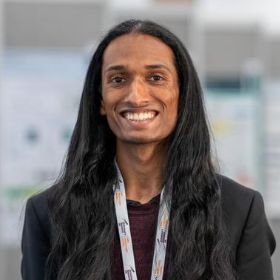
Dr Ajantha Abey
Author
Dr Ajantha Abey is a Postdoctoral Researcher in the Kavli Institute at University of Oxford. He is interested in the cellular mechanisms of Alzheimer’s, Parkinson’s, and other diseases of the ageing brain. He previously explored neuropathology in dogs with dementia and potential stem cell replacement therapies. He now uses induced pluripotent stem cell derived neurons to try and model selective neuronal vulnerability: the phenomenon where some cells die but others remain resilient to neurodegenerative diseases.


 Beccy Owen
 Bernie McInally
 LSE Impact Blog
 Dr Chloe Fawns-Ritchie
 Dr Yvonne Couch
 Dr Clíona Farrell

 Dementia Researcher
 Rahul Sidhu
 Dr Emma Law
Writing up my PhD now, coming towards the finish line, and this is all spot on, great advice!